Nepal produces some of the world’s most sought-after handmade carpets. Collectors know it. Interior designers know it. High-end hotels from Dubai to New York specify Nepali carpets by name in their fit-out briefs.
But for a brand or buyer approaching Nepal sourcing for the first time, the process can feel opaque. Dozens of manufacturers and exporters compete for attention, quality varies enormously, and the terminology — knot counts, pile height, GHI grade — requires translation.
This guide cuts through that. By the end, you’ll know exactly what to ask for, what to pay for, and what red flags to avoid.
Why Nepal for Handmade Carpets?
The short answer: nowhere else combines the raw materials, the skill base, and the price point that Nepal does.
Nepali carpet weaving draws from the Tibetan tradition — brought to the Kathmandu Valley by Tibetan refugees in the 1960s — and has since evolved into a sophisticated export industry producing carpets that hang in five-star hotel lobbies and private residences across Europe, the Middle East, and North America.
The key advantages for brands:
- Pure wool pile : Himalayan highland wool has a natural lanolin content that gives it resilience, lustre, and long-term durability unmatched by synthetic alternatives
- Natural dyes available : vegetable and mineral dye options for brands targeting sustainability-conscious buyers
- Full custom capability : size, design, colour palette, pile height, and weave structure are all specifiable
- Competitive pricing : even premium hand-knotted pieces arrive at landed costs that allow strong retail margins
“A hand-knotted Nepali carpet is not a commodity. It’s a documented, verifiable piece of craft and the market is increasingly willing to pay for that distinction.”
Understanding Carpet Quality: Knot Count
The most important quality metric for hand-knotted carpets is knot count — measured as knots per square inch (KPSI) or knots per square metre.
| Grade | Knot Count | Typical Use | Characteristics |
|---|---|---|---|
| 60 knot | ~36 KPSI | Entry-level decorative | Good for bold, geometric patterns |
| 80 knot | ~64 KPSI | Mid-range residential | Finer detail, smooth surface |
| 100 knot | ~100 KPSI | Premium residential / hospitality | High detail, dense pile |
| 120 knot+ | ~144 KPSI | Collector / luxury hotel | Extremely fine, portrait-quality detail |
For most brand buyers entering the market, 80–100 knot pieces offer the best balance of quality, production speed, and price point.
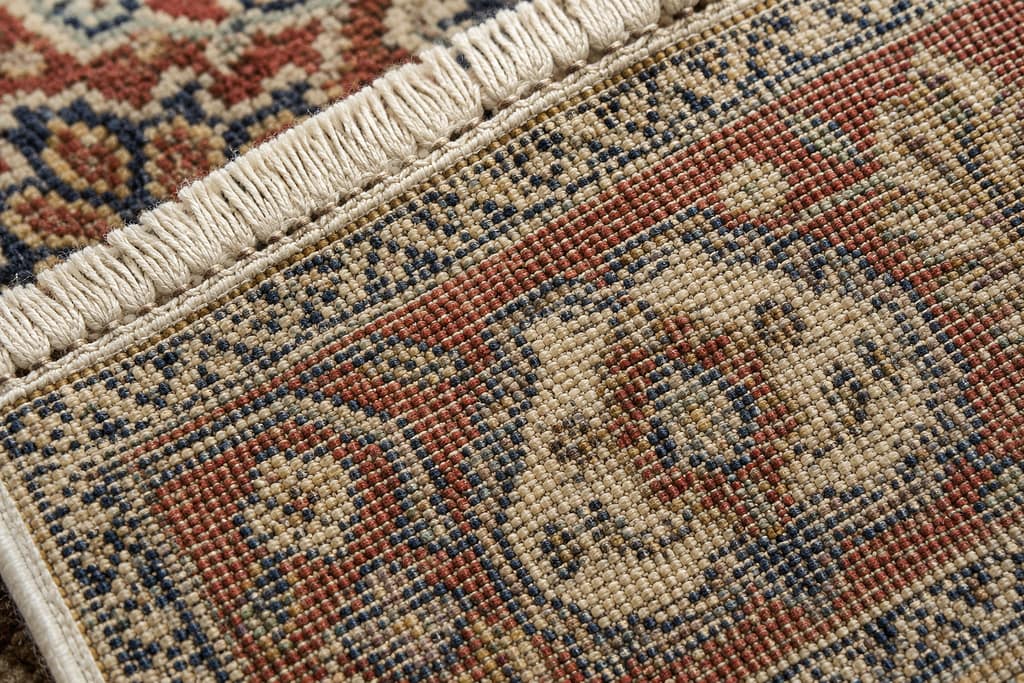
| “Knot count” is sometimes inflated by suppliers. Always request a back-of-carpet photograph and, for significant orders, a physical sample before committing to full production. |
Pile Materials: What You Should Specify
Tibetan highland wool remains the industry standard for durability and finish. It has a natural crimp that helps the pile stand upright and resist crushing underfoot.
For premium or bespoke ranges, two upgrades are worth knowing:
Silk pile or silk highlight — weaving pure silk or silk accents into a wool pile creates a shimmering contrast effect visible as the light angle changes. This is a specification used by luxury interior designers and hotel brands for statement pieces.
Bamboo silk (viscose) — a more affordable lustre option. It photographs beautifully and appeals to mid-market buyers, but has lower durability than wool. Best for low-traffic decorative use.
Lead Times and Minimum Orders
This is where many first-time buyers are surprised — in a good way.
Hand-knotted carpets are not produced on machines. A single 9×12 foot carpet at 100 knot grade takes a team of two weavers approximately 12–16 weeks to complete. This is not a lead time problem — it’s the nature of the product, and your customers (and your margin) reflect it.
Practical guidance for planning:
- Sampling: allow 4–6 weeks for a custom sample in your specified design and size
- Small production run (10–30 pieces): 14–20 weeks depending on complexity
- Larger runs (50+ pieces): discuss phased delivery — manufacturers can stagger completion across looms
Minimum order quantities at Rita Industries start from a single custom piece for sampling. Production runs are negotiated based on size and specification.
What Separates a Manufacturer from a Middleman
This distinction matters significantly for price and quality control.
A middleman (often presenting as an exporter or trading company) sources finished carpets from multiple small workshops, marks them up, and presents them as their own production. You have no visibility into actual quality control, no ability to specify production details, and limited recourse if something is wrong.
A direct manufacturer like Rita Industries operates their own looms, employs their own weavers, controls dye batches in-house, and can accommodate specification changes because they own the entire process.
Questions that reveal which you’re dealing with:
- Can I visit the production facility?
- Can you provide a video of my specific carpet being woven?
- Can I request a mid-production quality check?
- Who mixes and applies the dyes?
A real manufacturer answers all four with yes. A middleman deflects.
Certification and Documentation
For brands selling into the EU, UK, or North America, the following documentation is standard and should be provided by any serious manufacturer:
- GHI (Goodweave) certification — verifies no child labour in production (Rita Industries is GHI compliant)
- CITES documentation — relevant if any natural dyes from protected species are used (rarely applicable but worth confirming)
- Customs export paperwork — commercial invoice, packing list, certificate of origin
- Fibre content declaration — required for retail labelling in most markets
Note: If a manufacturer hesitates or is vague about any of these, treat it as a serious red flag. Established exporters have these processes fully in place.
Starting Your First Order
The simplest way to begin is with a sample request — specify a design (or share a reference image), a size, and a quality grade. A physical sample in your hands tells you more than any catalogue photograph.
From there, a standard first order typically looks like:
- Sample approval + specification sign-off
- 30–50% deposit to start production
- Mid-production photo/video update
- Final inspection before shipment
- Balance payment before dispatch
Rita Industries offers DDP (Delivered Duty Paid) shipping to most major markets, meaning you receive your order at your warehouse with all customs and duties already handled.
| Request a sample carpet to see the quality in person — start here. |